
Let's Simplify Body Lock Passing
It's actually not that complex

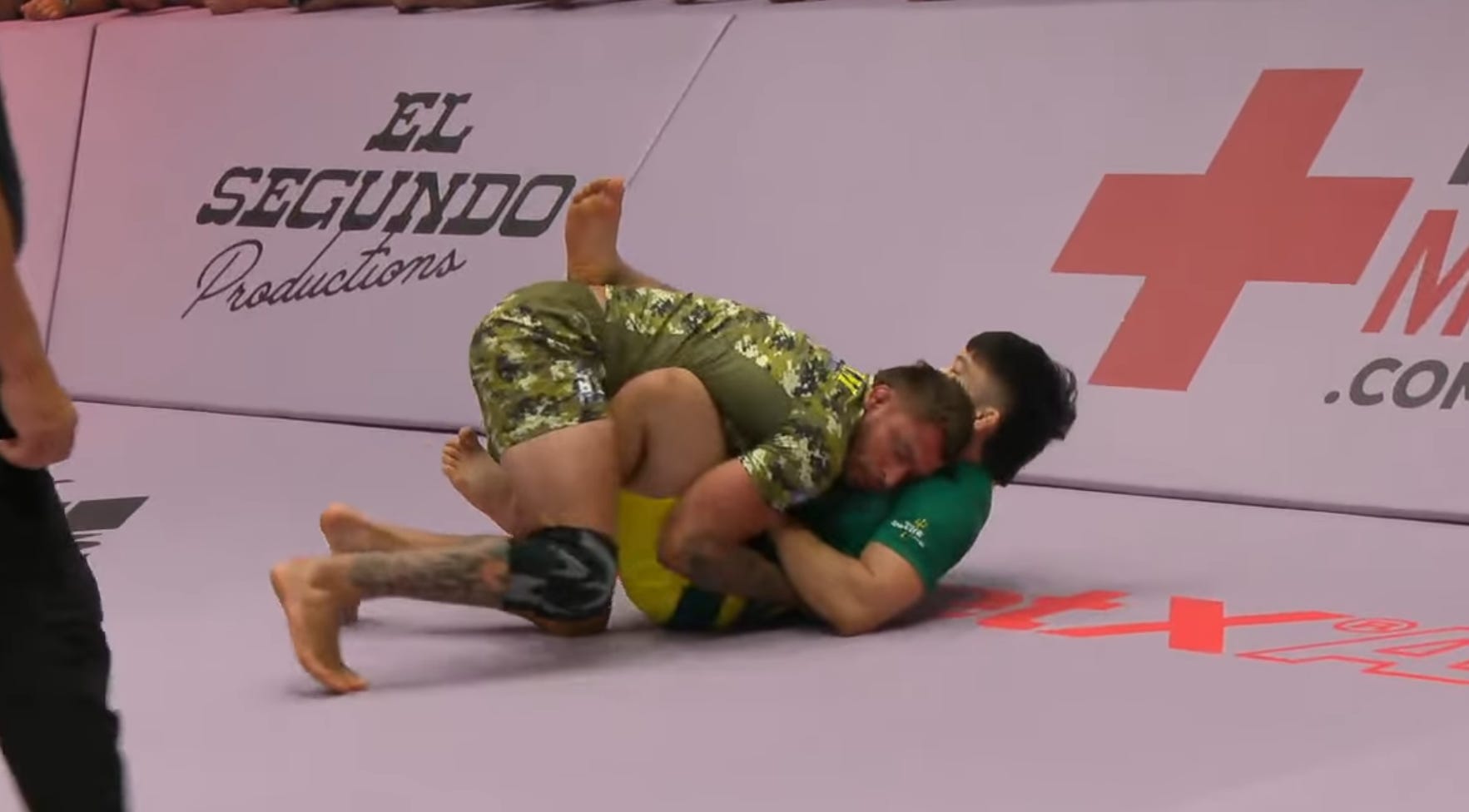
The body lock pass is one of the most popular forms of passing in modern no-gi jiu-jitsu, and one of my favorites that I’ve been using for a while already.
Nicky Ryan has claimed multiple times that it’s one of the best ways to pass the guard in No-Gi. This is because it allows you to completely shut down any offense from the guard before passing, being chest to chest the whole sequence. It’s also a great way to force chest to chest half guard, so that’s great.
Now, when trying to figure out how to actually be effective with it, I came across different information on how to do it. I even went to seminars by Nicky Ryan and Robert Diggle, who both dedicated time on this topic (with Nicky expending the whole session there!).
After a lot of study, I feel stupid for how simple it actually is. It turns out grapplers like to make things seem complicated. I don’t think that’s with any bad intention in mind, I just think that they are really passionate about it and want to share every thought they have. That’s not fundamentally bad, but for someone who’s just trying to make the body lock pass work, it’s not good to have that amount of information.
So, today, I’ll simplify body lock passing for you, so you can use it more effectively in training without the need to remember the 14 steps X instructor taught in his DVD.
Without anything else to say, let’s dive into it.
Getting to The Hips
Your first focus should be to connect your hands around your opponent’s waist. If you are able to do that, then you’ll get strong access to the hips.
Of course, the name of “body lock” already tells us this, so this isn’t any secret, but I’ll like to add a little bit to this.
Body lock passing especially opens up against someone trying to play seated guard. A good guard player will have their arms in front and will be trying to grip fight their way to their own connection. We can’t get to the body lock if our opponent has their arms still in front of them.
So, we want to get their arms, and especially their elbows, away from their body. That’s how we get access to the waist.
There are multiple ways to do this, but my favorite by far is destabilization. If, from a seated guard, you force your opponent to post a hand on the mat, they are extending their arm to do so, giving you an opportunity to shoot for a body lock.
Here’s an example by Buchecha himself:
Now, as you see, Buchecha wasn’t able to complete the pass, and his opponent went to turtle to avoid the score. That leads us to the next part.
Pinning The Shoulders
This part is extremely important, both to be able to score and to avoid being swept from this position.
We want to pin the upper body, bringing the back of our opponent to the mat.
Now, to be fair, we rarely want to get our opponent completely flat to the mat (and I’ll explain why in the last part), but rather, we want them a little bit on their side. That said, if you initially force both shoulders to the mat, that’s okay, and you can adjust later when you are trying to pass.
You can see Declan Moody forcing his opponent’s back to the mat by using his head to push on the shoulder, before getting the guard pass:
In the last two examples, with Buchecha and Moody, both of their opponents had their legs extended, making it easy to smash them. Some times, this overextension won’t be present, but rather, we’ll find ourselves in more of a butterfly guard. That’s when the next part takes importance.
Heels to Butt
If we can’t take advantage of an overextension, then we are going to force an overcontraction in their legs, so our opponents cannot generate force effectively from there. We do this by focusing on pinning their heels to their butt.
This can be done in any way, and you don’t even need to keep the body lock to do it. I usually just pull my opponent towards me with the lock and get closer myself to their hips, but that’s just how I reorganize myself around the task. You may do it differently.
Here, you can see Nicky Ryan pinning his opponent’s heels to his butt before getting the pass.
So far, these three first parts were about maintaining the position and staying safe. To actually get the pass, you need to fulfill one more thing.
Knee to The Mat
To pass from the body lock in the traditional way, we want to step over one knee to either get the pass or force chest to chest half guard.
If you have insane hip flexibility, like the Rod brothers or Jozef Chen, you’ll probably won’t struggle with this, but if you are human like me (and I’m pretty flexible), you’ll need to force your opponent’s knees closer to the mat before passing.
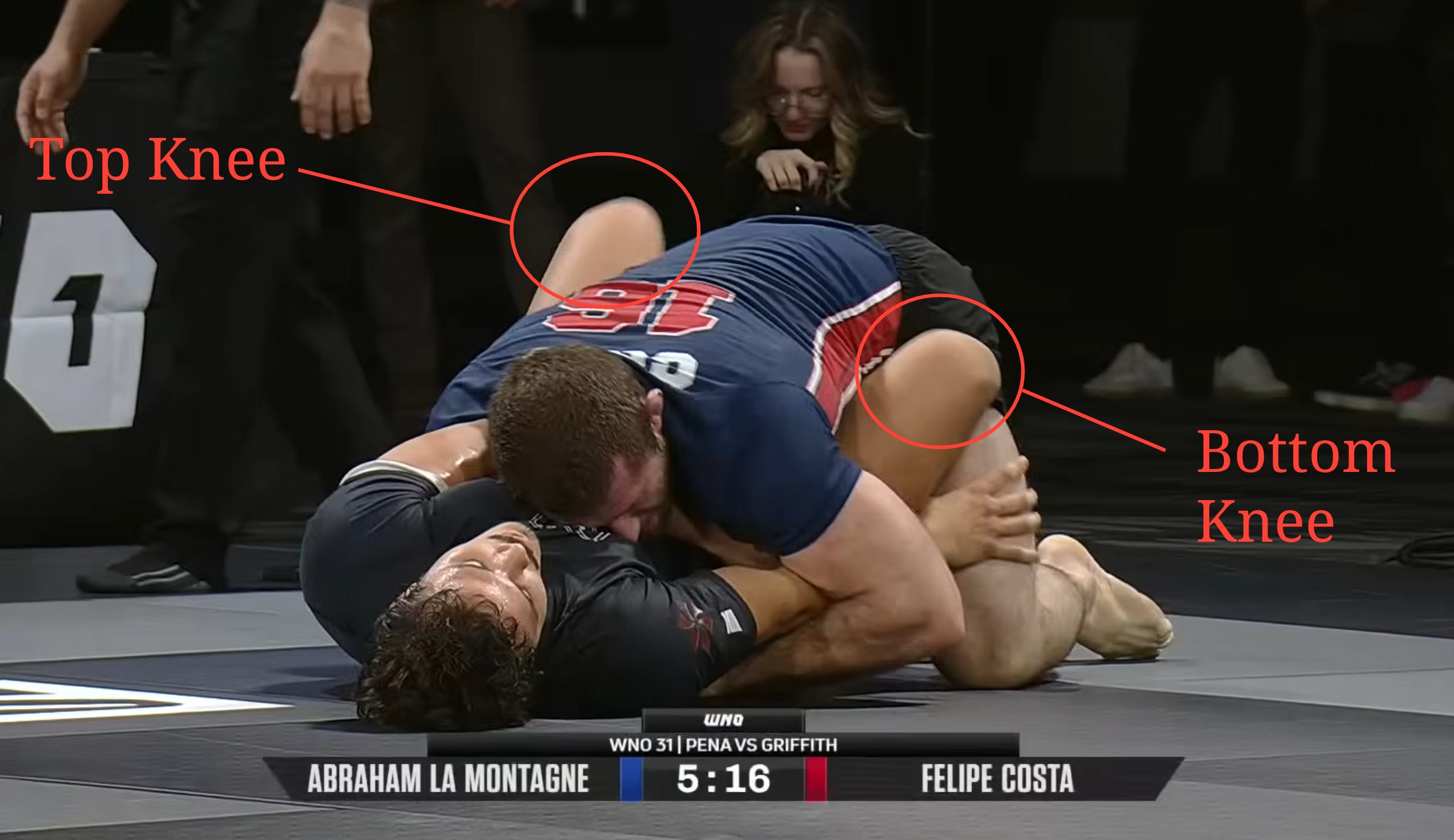
That’s why I claimed before that you usually want your opponent a little bit on their side, because that way, you create a bottom knee and a top knee, and the bottom knee is the side in which we want to pass most of the time.
So, focus on using your body in any way you can to bring the knee closer to the mat.
La Montagne, in the next sequence, after losing chest to chest half guard, keeps the body lock and works to lower the bottom knee as much as possible before stepping over it, forcing chest to chest half guard once again, and passing into mount.
Notice how now there’s a top knee and a bottom knee. We want to step over the bottom knee, but first, we need to create it in the first place by bringing that knee as close as possible to the mat.
So…
With these four things in mind, you should be able to develop a good capacity to pass with the body lock.
Of course, I didn’t cover all types of body lock passing. This is the traditional style that Nicky Rod, Robert Diggle, and Nicky Ryan seem to favor, but if you look into other guys like Jett Thompson or Max Hanson, you’ll see them passing in a different way. They still focus on pinning the upper body, but they focus more on getting one leg in the middle, to then split their opponent’s legs apart and pass. I didn’t cover that today. If you are interested in that, let me know.
Anyway, I hope this post was useful. Have a great day!
Concise and clear. Good stuff brother