
Fix Your Outside Passing or Get Left Behind
How to Kill the Lasso

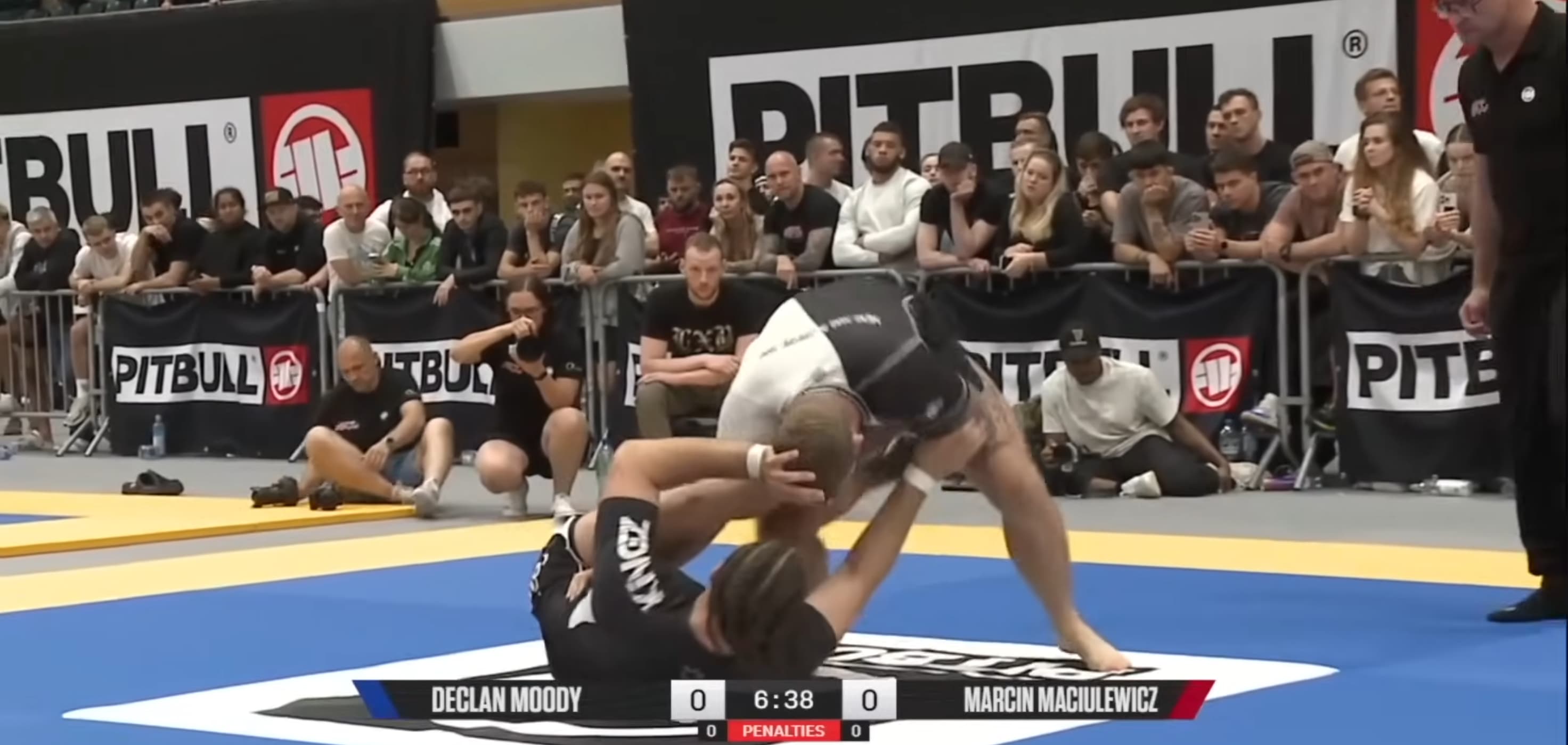
One of the main problems we’ll face when trying to pass to the outside will be our opponent putting on a lasso with their far leg on our near arm. When this happens, our opponent has a solid lower body frame—that also can work as a connection for pulling purposes—letting their arms free to connect and pull.
When our opponent has the lasso, we can’t pass the guard or camp on the outside. That’s why it’s important for us, as the guard passer, to be ready for this response.
In order to be able to get the lasso in the first place, your opponent needs to be on his side. If you are able to force him flat on his back while outside camping, the lasso becomes unavailable for most people.
Some guard players are still able to get the high leg from that position—like Paweł Jaworski—thanks to their flexibility. In that case, putting them on their back isn’t enough, and we want to actually force them to face the opposite side and lift their near side of their body off the mat. If we manage to do it, there’s no way they can get a lasso.
That being said, it can be hard to do any of those two things if our opponent is already on his side, and that’s when usually is the time to stay at the feet and circle around for north south.
But, if you already find yourself in the lasso, you need to address it.
While I think repummeling your arm works, the problem is that your opponent can just pummel back his lasso, and it’s quite hard to win that battle. You could, theoretically, pummel your arm to the inside and then focus on forcing your opponent to his back (or to the opposite side), so he can’t get the lasso again, and that would be a great strategy.
We can also counter the lasso, and while there are probably infinite ways to do it, this example by Declan Moody—one of the best guard passers in the world, in my opinion—completely blew my mind for how effective it was.
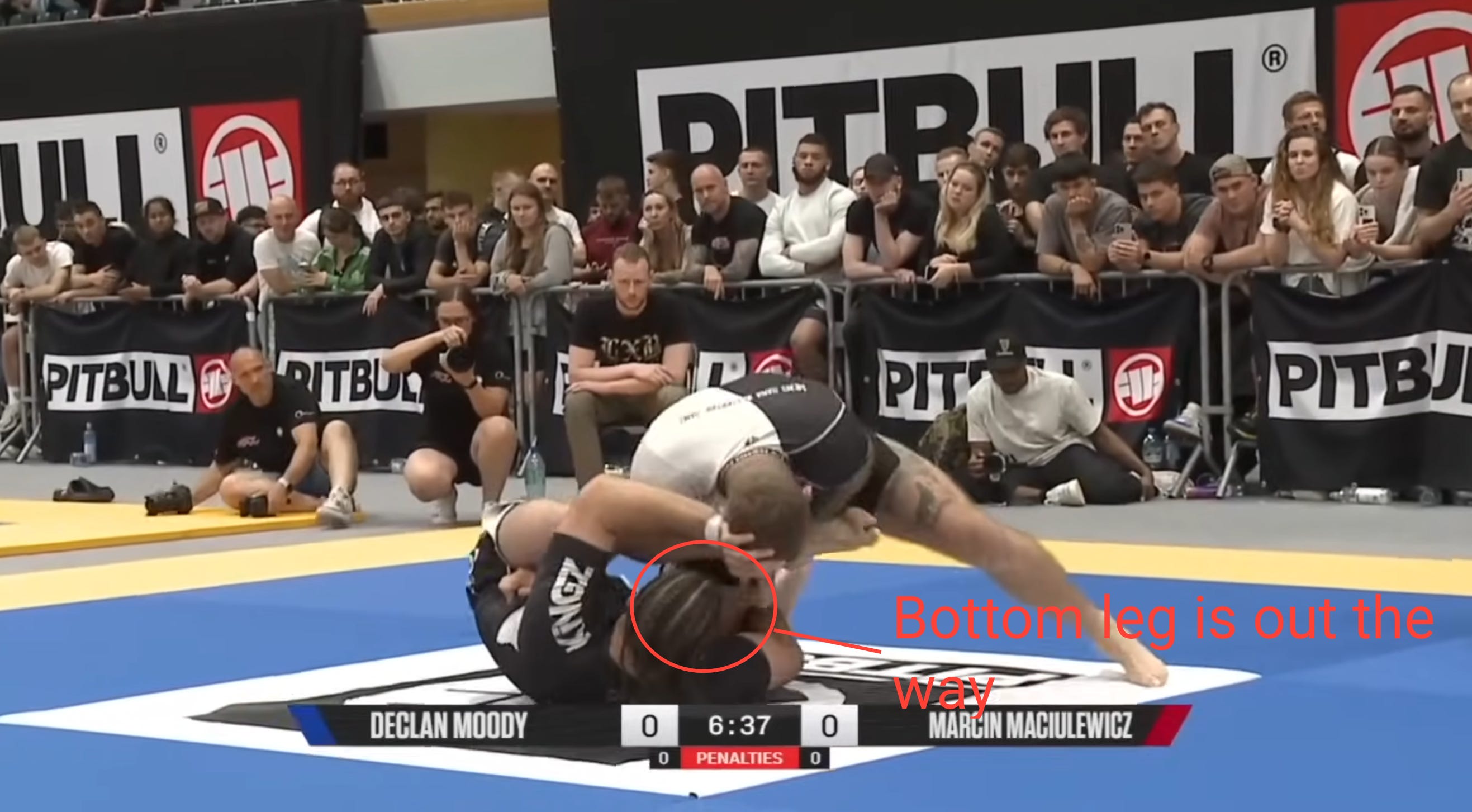
Declan initially tries to get to the hip and knee post camping position, which is easily stopped with the lasso by Marcin. In response to that, Declan puts all his attention on the bottom leg, pinning it to the ground, and stepping his trial knee over it.
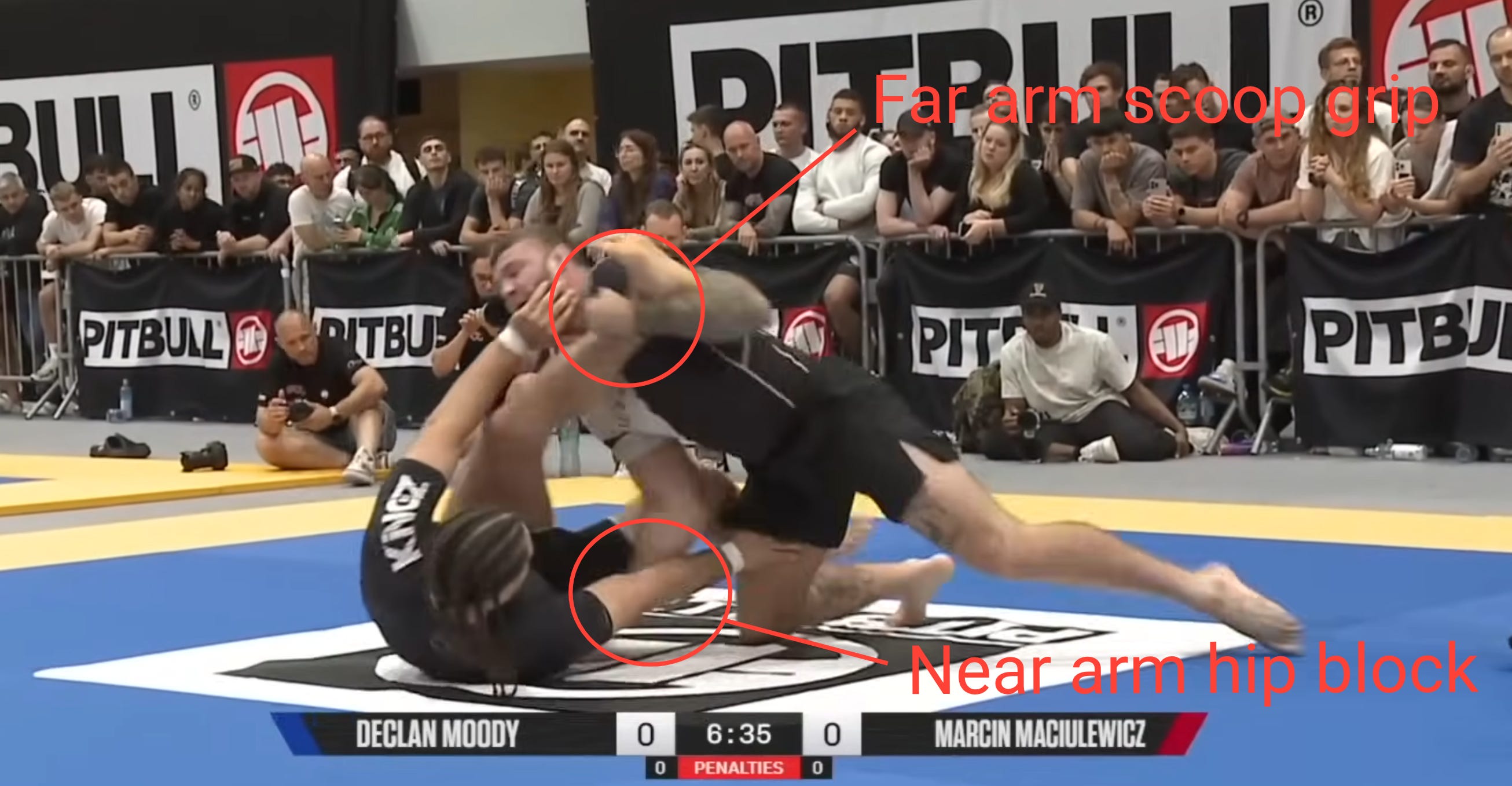
Once there, he takes a scoop grip with his far arm on the ankle of the lasso, which allows him to lift the leg out of his armpit while his near arm punches down to block the near hip. He basically ends up with double scoop grips, passing to north south effectively.
Now, the reason Declan focused first on the bottom leg is because, most likely, if he didn’t, that leg would have been in the way of his passing attempt after dealing with the lasso in the form of a low leg—keymaster of K-Guard— or in a half guard or Reverse De La Riva. By stripping all connection from that leg and stepping over it with his trial knee, there was nothing in place stopping him to run to north south once he cleared the lasso.
Summary
The lasso from open guard is one of the best ways to stop outside passing, if not the best. To prevent the lasso in the first place, we force our opponent flat on his back. More flexible opponents will still be able to get the lasso from there, in which case we need to force them to face the opposite side to where we are.
It can be hard to do this once they are already on their side, in which case it is better to stay at the feet and go to north south.
If we stay perpendicular to our opponent and he gets the lasso, we can pummel our arm to the inside again, but our opponent can do the same with his lasso. We could, theoretically, pummels our arm and then look to force our opponent to his back or to his far side.
That being said, we can directly counter the Lasso. In Declan’s example, he first beats the bottom leg, and then uses both arms to clear the lasso by taking a scoop grip on the ankle with his far arm and a hip block with his near arm, passing to north south.
While this is far from an organized system, it should help you to beat the lasso and pass more guards, both in your gym and in competition.
So…
The lasso has been around for a while. It’s not longer a “Gi-specific guard”; it’s extremely useful in No-Gi as well, for both defensive and offensive purposes. That’s why we need to learn how to deal with it, or we are going to get left behind by flexible and skillful guard players.
Anyway, that’s everything I had to say. I hope it’s helpful. Have a great day!
That Declan Moody response has blown my mind. 🤯